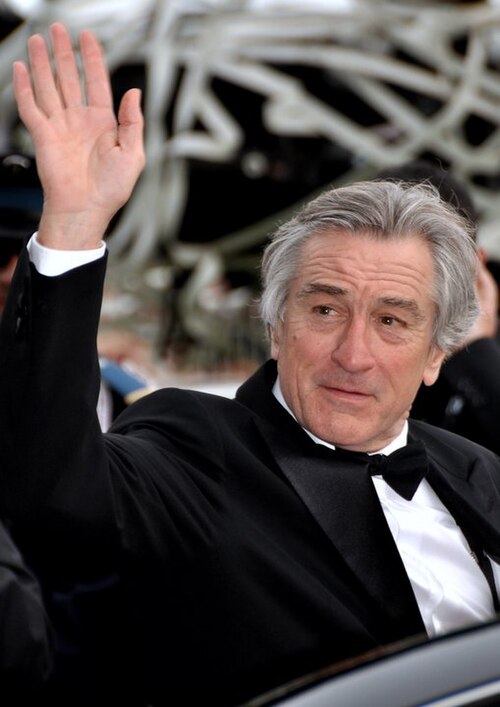
Robert De Niro: The Godfather of Gangster Cinema's Iconic Roles
When the silver screen needs a figure to embody the complex, often brutal, world of organized crime, one name consistently rises above the rest: Robert De Niro. For decades, he has been more than just an actor in gangster films; he has become the genre's very pulse, its conscience, and its most terrifying force. His unparalleled ability to delve into the psyche of mob bosses, enforcers, and even the periphery players has earned him the moniker, "The Godfather of Gangster Flicks." His career is a masterclass in cinematic intensity, and arguably no single year underscored his dominance more powerfully than 1995, with a particular gangster film that would etch itself into cinematic history.
De Niro's command of these high-stakes, high-wrongdoing narratives goes far beyond simply appearing in a large number of mob movies. It's the sheer breadth of his characterizations – from the stoic, ruthless pragmatist to the explosively violent psychopath – that truly sets him apart. He navigates the treacherous moral landscapes of these roles with a nuanced intensity that leaves audiences both mesmerized and unnerved. Through iconic one-liners, menacing on-screen threats, and performances so raw they feel uncomfortably real, De Niro doesn't just act in gangster films; he owns them.
Casino: The Definitive Gangsterfilm 1995 Robert De Niro Masterpiece
While Robert De Niro's filmography boasts a pantheon of crime epics, the year 1995 delivered a monumental addition to his legendary status: Martin Scorsese's
Roger Ebert's "Flawless" 1995 Robert De Niro Gangster Film,
Casino. This sprawling, opulent, and ultimately tragic tale of ambition, loyalty, and betrayal in the heart of Las Vegas serves as a quintessential "Gangsterfilm 1995 Robert De Niro" showcase. De Niro stars as Sam "Ace" Rothstein, a Jewish American gambling handicapper hand-picked by the Midwest mob to run their front operations in the Tangiers Casino.
Casino is more than just a mob movie; it's a meticulously detailed exposé of how the mob truly operated behind the glittering facade of Vegas, and how personal failings ultimately led to their downfall. De Niro's portrayal of Ace Rothstein is a masterclass in controlled intensity. Ace is not the same hot-headed, volatile character we might expect from other De Niro gangster roles. Instead, he's a calculating, meticulous businessman, obsessed with order and efficiency. His quiet authority is punctuated by rare, but devastating, outbursts, making his character all the more compelling.
The film's "flawless" reputation, as noted by critics like Roger Ebert, stems from its epic scope, incredible production design, authentic costume work, and the electrifying performances from its A-list cast. Opposite De Niro, Joe Pesci delivers another unforgettable, terrifying performance as Nicky Santoro, Ace's childhood friend and a brutal mob enforcer whose penchant for violence consistently threatens to derail Ace's carefully constructed empire. Sharon Stone, in her Oscar-nominated role as Ginger McKenna, Ace's beautiful but troubled wife, provides the volatile emotional core that unravels the men around her.
What makes
Casino a standout among the "Gangsterfilm 1995 Robert De Niro" canon is its deep dive into the specific mechanics of mob control over legitimate businesses, and the inevitable clash between organized crime's old ways and the rising corporate structures. De Niro embodies the struggle to maintain order in a world constantly teetering on chaos, a world he helped build but ultimately couldn't control. His performance anchors the film, making Ace's rise and fall a truly Shakespearean tragedy in the neon-lit desert.
De Niro's Method: Crafting Unforgettable Mobsters
The reason Robert De Niro so consistently excels in gangster roles lies in his commitment to method acting and his relentless pursuit of authenticity. He doesn't just play characters; he *becomes* them, often immersing himself in their world to understand their motivations, mannerisms, and internal struggles. This dedication imbues his portrayals with a psychological depth rarely seen on screen.
Consider the detailed preparation that goes into each role:
*
Intense Research: De Niro is known for his extensive research, whether it's studying real-life mob figures, practicing accents, or learning specific skills relevant to his character. For a film like
Casino, while not as overtly physical as some of his other roles, his understanding of the subtle power dynamics and the specific way mob figures carried themselves in public was crucial.
*
Physical Transformation: While not always dramatic, De Niro often adjusts his physicality to suit the character. In
Casino, Ace's tailored suits and composed demeanor reflect his desire for legitimacy, a stark contrast to Nicky Santoro's more untamed, aggressive physicality.
*
Psychological Immersion: De Niro delves into the internal world of his characters, exploring their fears, desires, and vulnerabilities. This allows him to portray gangsters not as caricatures, but as complex human beings, capable of both immense brutality and surprising moments of vulnerability or calculated charm. This depth is what allows audiences to be simultaneously repulsed by and fascinated by figures like Ace Rothstein.
For aspiring actors and filmmakers, De Niro's approach offers invaluable lessons. It highlights the importance of going beyond the script to truly understand the world and mindset of a character. It teaches that authenticity is not just about mimicking, but about internalizing and transforming. His ability to convey so much with a look, a subtle gesture, or a shift in vocal tone is a testament to this deep psychological work, making his gangsters not just memorable, but truly iconic.
Beyond 1995: A Legacy of Iconic Gangster Roles
While
Casino undoubtedly stands as a towering achievement and a defining
Robert De Niro's Gangster Films: Ranking His Iconic Roles for the year 1995, it is merely one jewel in a crown studded with unforgettable performances. De Niro's gangster filmography spans decades, each role adding another layer to his legendary status.
His breakout roles in films like
Mean Streets (1973) showcased his raw, explosive energy as Johnny Boy, a small-time hood. Then came the chilling portrayal of the young Vito Corleone in
The Godfather Part II (1974), where he mastered the subtle menace and quiet power of a burgeoning crime lord, earning him his first Academy Award. The 1990s saw him reach new heights with
Goodfellas (1990), playing Jimmy Conway, a charming yet utterly ruthless career criminal. Even in more recent outings like
The Irishman (2019), De Niro brought a poignant gravitas to the aging hitman Frank Sheeran, exploring themes of regret and isolation that rarely feature in the genre.
Other notable appearances include his cold-blooded assassin in
Heat (1995), a film released in the same year as
Casino, proving his incredible versatility even within a single year. These diverse roles demonstrate his capacity to play every facet of the gangster archetype – from the loyal foot soldier to the cunning strategist, the street-level thug to the sophisticated crime boss. Each character, regardless of their position in the criminal hierarchy, is infused with a unique personality and an undeniable presence, cementing De Niro's legacy as the most influential actor in the history of gangster cinema.
Conclusion
Robert De Niro's indelible mark on gangster cinema is undisputed. His ability to inhabit these complex, often morally ambiguous characters with such conviction and intensity has set a benchmark for the genre. From the volatile streets of New York to the glittering, corrupt casinos of Las Vegas, De Niro has consistently delivered performances that are both electrifying and deeply human. The "Gangsterfilm 1995 Robert De Niro" contribution, epitomized by the magnificent
Casino, perfectly encapsulates his enduring appeal and his mastery of a genre he has truly made his own. His legacy isn't just a collection of great performances; it's a profound exploration of power, loyalty, and the dark allure of the criminal underworld, forever shaping how we perceive these iconic figures on screen.