Robert De Niro: The Undisputed King of the Underworld
When the conversation turns to cinematic portrayals of the criminal underworld, one name invariably rises to the top: Robert De Niro. For decades, De Niro has not just played mobsters; he has embodied them, making each character a masterclass in menace, complexity, and unforgettable screen presence. From the raw, unpredictable street thug to the cool, calculated crime boss, his range within the gangster genre is nothing short of extraordinary. He's not merely an actor who appears in gangster films; he is, for many, the very Godfather of Gangster Cinema's Iconic Roles, a titan whose performances have shaped the genre itself.
De Niro's ability to dive deep into a character, whether through his legendary method acting or his uncanny knack for delivering iconic one-liners, has ensured his place in film history. He commands the screen with an intensity that can be both terrifying and mesmerizing, making his villains and anti-heroes tragically human. This article delves into his illustrious career, ranking some of his most iconic gangster roles, with a special focus on a pivotal film from the mid-90s that continues to resonate with audiences and critics alike.
The Legacy of a "Gangsterfilm 1995 Robert De Niro": Delving into Casino
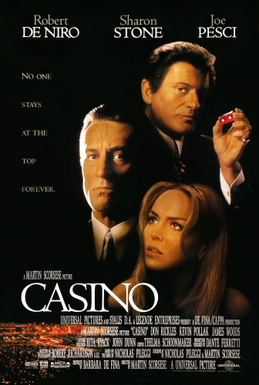
While Robert De Niro's filmography is replete with gangster classics spanning decades, the year 1995 holds particular significance for fans of his work in the genre. It was in this year that he delivered a performance in a film that many critics, including the legendary Roger Ebert, hailed as "flawless." We are, of course, referring to Martin Scorsese's epic crime saga, Casino. This Roger Ebert's "Flawless" 1995 Robert De Niro Gangster Film is often considered a high watermark in his collaboration with Scorsese and a quintessential Gangsterfilm 1995 Robert De Niro, showcasing his mastery of a very particular kind of underworld figure.
In Casino, De Niro plays Sam "Ace" Rothstein, a Jewish-American gambling handicapper hand-picked by the Chicago Outfit to oversee the Tangiers Casino in Las Vegas. Ace is a meticulous, detail-oriented professional, more businessman than brute. De Niro's portrayal is a fascinating study in controlled power and escalating paranoia. We see him as the shrewd operator, perfectly balancing the books and maintaining order, but also as the man whose carefully constructed world unravels due to the volatile influences of his best friend, Nicky Santoro (Joe Pesci), and his troubled wife, Ginger McKenna (Sharon Stone).
De Niro imbues Ace with a quiet authority that contrasts sharply with the explosive violence often associated with his other gangster roles. His performance captures the subtle nuances of a man trying to operate by rules in a lawless world, highlighting the internal struggle between his legitimate business acumen and the brutal realities of his mob connections. The film itself is a sprawling, vivid depiction of the rise and fall of Las Vegas under mob rule, and De Niro's anchoring performance as Ace Rothstein is central to its enduring power and critical acclaim. It cemented his reputation in the mid-90s as the definitive actor for complex, larger-than-life crime figures.
Beyond 1995: Other Quintessential De Niro Gangster Roles
While Casino stands out as a monumental Gangsterfilm 1995 Robert De Niro, his career is a tapestry woven with numerous other unforgettable performances in the genre. Here, we look at some of his other iconic roles that define his legacy:
Charlie Cappa in Mean Streets (1973)
Often overlooked by those who only focus on his later, grander productions, Mean Streets marked De Niro's explosive arrival onto the gangster scene. As Johnny Boy, the wild, unpredictable, and deeply indebted friend of Harvey Keitel's Charlie, De Niro delivered a raw, unfiltered performance that immediately announced his presence. He was a force of nature, embodying the chaotic energy and desperate charm of a small-time hood. His dynamic, almost animalistic portrayal set the stage for the kind of intense, character-driven performances that would become his hallmark.
Jimmy Conway in Goodfellas (1990)
Another towering collaboration with Martin Scorsese, Goodfellas presented De Niro as Jimmy Conway, the calm, calculating, and utterly ruthless "Pardon Me" Jimmy. Unlike Johnny Boy's volatile nature or Ace Rothstein's measured approach, Jimmy is a man of quiet menace. He's the strategist, the one who orchestrates the big scores and then meticulously eliminates loose ends. De Niro's performance here is subtle yet terrifying, often conveying more with a steely gaze or a slight tilt of the head than with dialogue. He's the picture of cool, collected danger, making him one of cinema's most memorable mobsters.
Lorenzo Anello in A Bronx Tale (1993)
In his directorial debut, A Bronx Tale, De Niro offered a different perspective within the gangster milieu. As Lorenzo Anello, the hardworking, honest bus driver striving to keep his son, Calogero, away from the allure of local mob boss Sonny (Chazz Palminteri), De Niro portrays a man of unwavering moral principles. While not a gangster himself, Lorenzo is deeply embedded in a community where the mob's presence is undeniable. This role allowed De Niro to explore the flip side of the gangster coin – the struggle to maintain integrity and family values in the shadow of organized crime. His performance is understated, powerful, and deeply human.
Paul Vitti in Analyze That (2002)
Demonstrating his incredible versatility, De Niro also tackled the gangster genre with a comedic flair. In Analyze That (and its predecessor, Analyze This), he plays mob boss Paul Vitti, a character suffering from anxiety and panic attacks, forcing him into therapy with psychiatrist Ben Sobel (Billy Crystal). De Niro masterfully blends his trademark intensity with surprisingly effective comedic timing, poking fun at the very archetypes he helped create. It's a testament to his range that he can be both menacingly serious and genuinely hilarious within the same criminal persona.
Upcoming Projects (Beyond 2025)
Even decades into his career, De Niro continues to engage with the genre, with new gangster-adjacent projects often announced or in development for years to come. His enduring appeal in these roles underscores his lasting impact on cinematic storytelling.
What Makes a De Niro Gangster Performance Iconic?
Beyond the individual roles, there are recurring elements that elevate Robert De Niro's gangster portrayals to legendary status. His performances offer invaluable insights for film enthusiasts and aspiring actors alike:
- Methodical Immersion: De Niro's commitment to his characters is legendary. He often lives and breathes their reality, resulting in authentic, lived-in portrayals. He doesn't just play a role; he becomes it, infusing each character with a unique set of mannerisms, speech patterns, and psychological depths.
- Nuance in Menace: His gangsters are rarely one-dimensional brutes. Whether it's Ace Rothstein's calculated composure, Jimmy Conway's quiet ruthlessness, or Johnny Boy's volatile charm, De Niro always finds the layers beneath the surface. He explores their vulnerabilities, their pride, their fears, making them frighteningly real.
- Mastery of Dialogue and Silence: De Niro has a gift for delivering memorable lines that echo through cinema history. Yet, he is equally potent in silence, conveying volumes with a look, a gesture, or a change in posture. This command over both dialogue and non-verbal communication is a hallmark of his acting.
- Physicality and Presence: Each gangster character possesses a distinct physicality. De Niro might gain weight, change his gait, or adopt a particular way of holding himself to embody the role. This physical transformation, combined with his inherent screen presence, ensures that his characters dominate every frame.
- The Art of Collaboration: His most celebrated gangster films are often born from legendary collaborations, particularly with director Martin Scorsese and actors like Joe Pesci. These partnerships create a synergy that pushes each artist to new heights, resulting in cinematic masterpieces.
Practical Tip: When watching a De Niro gangster film, pay close attention not just to what his character says, but *how* he says it, and even more importantly, what he *doesn't* say. Observe the subtle shifts in his eyes, the tension in his jaw, or the way he subtly asserts dominance. These are the details that separate a good performance from an iconic one.
Conclusion
Robert De Niro's contribution to the gangster film genre is unparalleled. From the explosive raw energy of his early work to the sophisticated, multi-layered portrayals of his prime, including the indelible Gangsterfilm 1995 Robert De Niro, Casino, he has consistently redefined what it means to play a criminal on screen. His characters are complex, often terrifying, and always unforgettable. He has not only given us some of the most iconic figures in cinematic history but has also provided a profound, often disturbing, look into the human condition within the shadowy world of organized crime. As long as there are stories to tell about the underworld, Robert De Niro's legacy will undoubtedly stand as the gold standard.